
Founding Fathers and Constitution Day

Updated: Sep 17, 2025
September 17 is National Constitution Day which celebrates the hard work of our founding fathers to create an American government which has lasted for 236 years. Today, many are unsure if this American experiment has run its course or if we have strayed away from what the founding fathers wanted for our nation. What history tells us is that the brave men who fought for our independence were not nearly as united about how to move forward after the British were expelled as we might think.


In the summer of 1787 the original colonies were invited to send delegates to a Constitutional Convention in Philadelphia. All agreed except Rhode Island which was a unique situation. While all of the states owed Revolutionary War debts, generally in the form of bonds, as the smallest state and land locked by Connecticut and Massachusetts, Rhode Island was not able to sell land to cover its debt payments. Therefore the state charged import duties, raised taxes and printed money in order to pay debts. These choices led to a higher cost of living and hyperinflation. The Congress established by the Articles of Confederation had already attempted to create national import duties which Rhode Island blocked, earning it the name Rogues Island from the assembly. Rhode Islanders were concerned that a stronger central government would succeed in usurping their main revenue generator and they were also naturally distrustful of a federal government. Many New Englanders preferred the one state, one vote system entrenched in the Articles of Confederation.

While Rhode Island was not the only state that had concerns about what the next version of government would look like, all of the other states did send delegates. Of the 70 men tapped to attend this historic conference, only 55 actually turned up in Philadelphia. Many of the nominees who were major players from the Revolution chose not to attend. First, let’s look at those who did not make the trip at all.

If there was an inventor of Revolution it was certainly Samuel Adams. He had been pushing for independence before any one else in the new nation, so much so that he had become a broken record in the Second Continental Congress. So where was he at this critical juncture? An aging Samuel Adams was in Massachusetts attending to his duties as Lt. Governor and felt that national politics was a younger man’s game. That said, Adams expressed his thoughts to his friends and relations both in Philadelphia and beyond. In the end, Adams was swayed by none other than Paul Revere that the artisans of the state wanted a stronger federal government and he eventually threw his support into ratification.

The Massachusetts delegation was missing other key players who had participated in the Revolutionary Congresses. John Adams was selected by Congress as the first minister from the United States to Great Britain and was received by the King in June of 1785. He served in London for five total years, only three as official minister to the new country, not returning until 1788. This diplomatic service prevented his attendance at the Constitutional Convention, however, he was incredibly supportive of the document and the federal government that it created. In fact, he spent as much time as possible writing what amounted to a manifesto in support of the Constitution released in three volumes from 1787 to 1789.

Finally, John Hancock, whose large signature graced the Declaration of Independence, was not in Philadelphia for this next, critical step in the development of the nation. He had returned to Massachusetts in 1777 and became its governor in 1780. He remained in that post during the Constitutional Convention and his health was a factor as well: he suffered from chronic flares of gout and other complaints, preventing his travel. Hancock was hesitant about the Constitution, particularly without the Bill of Rights, but in the end, he threw his political weight behind it at the Massachusetts ratifying convention.
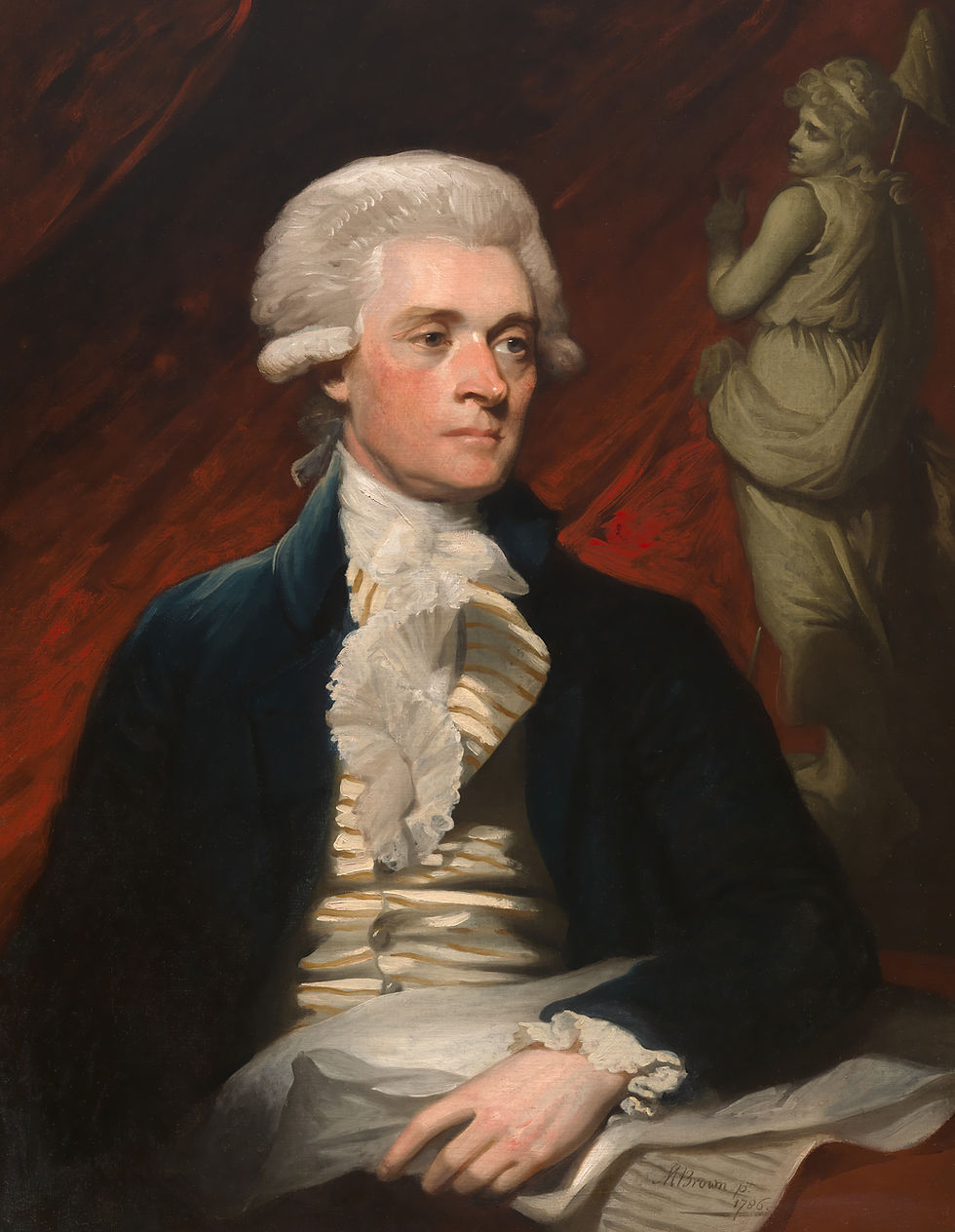
These Massachusetts men were certainly among the big players in the Sons of Liberty, but their colleagues from Virginia were no less prominent in the battle for independence. After writing the Declaration of Independence, how could Thomas Jefferson have missed putting his mark on the Constitution? Jefferson was in France from 1784 until 1789 serving as Minister from the United States. In the summer of 1787, he learned about the new proposed government via letters from his friends and responded with his thoughts and ideas on the signed document. Did he support the Constitution, designed in large part by his close friend and ally James Madison? From letters to Madison and others, it appears that while he did support Madison’s general framework, he believed there should have been a Bill of Rights and he thought term limits should have been included in the original framework. On these points, Jefferson was very consistent, arguing for the same elements included in the Virginia state constitution.

The man who officially introduced the idea of declaring independence to the Continental Congress, Richard Henry Lee, was invited to attend the Constitutional Convention, but chose not to attend. In his own writing, he generally supported the Constitution over the Articles of Confederation, but suggested several amendments and echoed many of his colleagues calling for a Bill of Rights. Due to anonymous publications that were, wrongly, attributed to him, he became the face of the antifederalists and eventually dropped out of the conversation altogether believing that his position had been misunderstood. In the end, Lee served as one of the first Senators from Virginia and while he did not favor a strong central government, was an effective member of the legislative body.

Finally, Patrick Henry, who famously said “give me liberty or give me death,” also passed on the Constitutional Convention. When questioned about the decision at the time, he said “he smelt a rat.” He felt that the federalists were determined to create a strong central government that would undermine the hard fought liberty of the American Revolution. He vigorously opposed ratification, but when Virginia finally approved the Constitution, he accepted defeat and began to work to improve the document, particularly by forcing Madison to create the promised Bill of Rights.

Now that we have looked at those who abstained from the convention, we can see that their reasons for skipping this trip to Philadelphia ranged from the logistical, to personal, to ideological. When we take a closer look at the 55 men who did travel to Philadelphia under the pretense of improving the Articles on Confederation, we see a similar mix of opinions. It was a heated summer both inside and out of the secret room where the new government was debated. Unlike the Declaration of Independence, the delegates were far from unanimous in their support. 16 of the delegates chose not to sign the Constitution at all, some of whom even advocated against its ratification by the states. They can generally be divided into two groups: those who didn’t sign because they couldn’t and those who didn’t sign because they wouldn’t.

The first group, couldn’t, experienced a range of common colonial American issues such as illness, themselves or family, or the need to attend to business at home. Without efficient transportation and limited communication along mail routes, it was difficult to address urgent problems at home while remaining in Philadelphia.
Oliver Ellsworth, from Connecticut, actively participated in the meetings that summer and he supported the final produced document. However, he was called home on business and was therefore not in Philadelphia on September 17, 1787 when the document was signed and unlike the Declaration of Independence, signers were not added later. Both of the Georgia delegates, William Houstoun and William Pierce, who didn’t sign, left the Convention early. The only dispute on record is that William Houstoun did not agree with the Great Compromise. However, Houstoun was only at the Convention for a month and we don’t have any additional evidence that his lack of attendance or signature were a form of protest. William Houston of New Jersey, not to be confused with the similarly spelled delegate from Georgia, only served at the Convention for one week before returning home due to illness. Houstoun died of tuberculosis in the summer of 1788 and therefore his positions on the Constitution and efforts to ratify are unknown. The delegates from North Carolina who did not sign had no major objections to the Constitution. In fact Alexander Martin is recorded as having attended nearly the entire convention, but contributing nothing to the general debate, serving on no committees and otherwise acting primarily as an observer. William Davie was not only a supporter of the Constitution, but in fact cast the deciding vote for the Connecticut Compromise, the only delegate from a big state to do so. He was called away from Philadelphia and therefore was unable to sign, but supported ratification. George Wythe, from Virginia and a signer of the Declaration, did not sign as he was forced to leave to care for his ailing wife.

The remaining non-signers were purposeful holdouts. Both Luther Martin and John Mercer from Maryland objected to the Constitution because they felt that its controlling central government overstepped the rights of the states. They also felt that it did not guarantee individuals their fundamental rights and therefore could easily lead to tyranny. In the end, both refused to sign and worked against ratification in their home state.
The abstainers from the ever powerful Massachusetts, Elbridge Gerry and Caleb Strong, opposed the document, however they worked through their concerns in very different ways. Caleb Strong left the Convention early because he objected to the Electoral College. He thought that Congress should choose the President. It is important to note here that several delegates literally packed up and left when the document wasn’t going their way. We think that Congress is too partisan and unable to compromise today, but in this critical moment in the nation’s history, representatives could be just as inflexible in their positions.

Elbridge Gerry also did not agree with many of the compromises that had been hammered out, but he did believe in the power of the overall process and therefore stayed and cast his vote against the Constitution as written. He aggressively lobbied his colleagues in Massachusetts not to ratify the document given his specific objections. However, after ratification, he accepted the will of the people and he became a Massachusetts Congressman and helped to draft the Bill of Rights.
Much like the Declaration of Independence debate, New York delegates John Lansing Jr and Robert Yates basically abstained from the debate, but took extensive notes to report back to the Governor. Both men opposed ratification of the Constitution and withdrew from national politics after Philadelphia.

The delegates from Virginia were some of the most influential revolutionaries of their time and their representation of Virginia was critical to the process of crafting the Constitution. Physician James McClurg did not sign the Constitution to keep the peace in the Virginia delegation which was stridently split between founders such as Washington and Madison versus Randolph and Mason firmly in the other camp. While Edmund Randolph refused to sign at the Convention itself, he was eventually won over and encouraged Virginia to ratify. George Mason, on the other hand, strenuously objected to the Constitution throughout the Convention and remained a vocal opponent not only of ratification, but of the country that it created. Mason’s strident positions eventually isolated him from his closest friends and neighbors and he nursed his ill health while continuing to criticize the federalist government of his neighbor and former friend George Washington. George Mason died at home without ever regaining his place in the political arena and fading from the story of the Revolution.
Despite the objections of these delegates and others at home, the Constitution was ratified by the required nine states and was accepted as the law of the land. Delaware was the first to accept in December of 1787 and New Hampshire was the critical ninth state, ratifying in June 1788 with Virginia following only a few days later and New York ratifying in July. North Carolina did not ratify the Constitution until after the Bill of Rights was passed and sent to the states, officially joining the union in December 1789. Rhode Island was the last of the original 13 colonies to ratify, finally caving to political and economic pressure in the spring of 1790.

The framers’ great experiment has carried the nation through international and internal conflicts, economic booms and busts, and evolving political parties and issues. From its first moment of inception, the Constitution has been controversial and yet resilient and that remains the case more than 200 years later.
See the Constitution for yourself:
The National Archives tour includes the founding documents and a few hidden gems in just one hour. Join our small groups to skip the line and learn the story behind these amazing pieces of history.

America Unscripted will take you on a deeper dive at both the Archives and adding details from the Museum of American History.
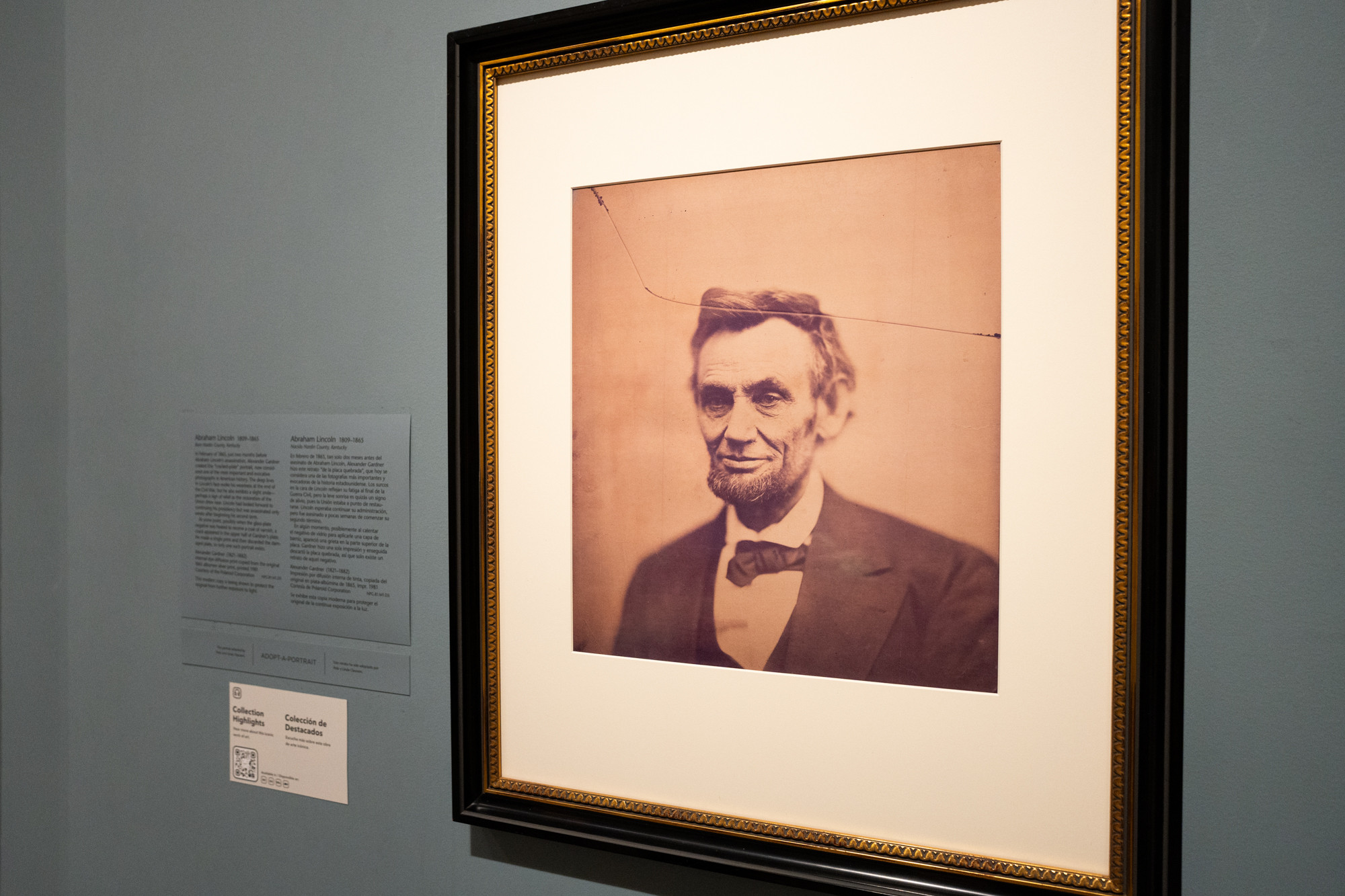
Our Founders Tour looks at both the documents in the Archives and the men who created them through their portraits in the National Portrait Gallery.


Comments